Recently people have been joining me on my Sunday Walks in Downtown Albany. Typically, I walk in Albany when I'm scheduled as a tour guide on the USS Slater. A slide show and a map are detailed at this blog entry. I plan on walking on Memorial Day, Monday, May 27. You can contact me at: dedocent@gmail.com.

More on the USS SLATER (www.ussslater.org).
Showing posts with label This Day. Show all posts

Sunday, May 12, 2013

This Day, seventy years ago, May 12, 1943

This Day, Seventy years ago

Seventy years ago on this day, Wednesday,  May 12, 1943 during the Battle of the Atlantic two allied ships were sunk (the Norwegian Motor tanker Sandanger in HX-237; and the Norwegian Motor merchant Brand in convoy HX-237) and one damaged (the American Steam merchant Cape Neddick). 

There were three German U-Boats sunk(U-186 in Wolfpack Elbe 2; U-89 and U-456 in Wolfpack Drossel). Wolfpack Drossel attacked convoy HX-237.  Seven U-Boats would be sunk, for a loss of four merchants and two allies aircraft. Convoy HX 237 was seen as a success by the Allies, 38 ships arrived safely. The convoy was another in a series of set-backs suffered by the U-boat Arm, referred to as Black May.
"...May opened with the battle for ONS 5, a hard-fought clash which saw heavy losses on both sides; 12 ships were lost for the loss of six U-boats. But the tactical improvements of the escorts began to take effect; The next three convoys that attacked saw seven ships sink, for the loss of seven U-boats. Finally, convoy SC 130 saw five U-boats sink (Admiral Dönitz's son Peter was among those lost aboard U-954) without loss to the convoy. Shaken by this, Admiral Dönitz ordered a retreat from the Atlantic, in order to recoup; the U-boats were unable to return to the fray in significant numbers until autumn, and never regained the advantage. Total allied losses in May were 58 ships of 299,000 long tons (304,000 t), of which 34 ships (134,000 long tons (136,000 t)) were lost in the Atlantic. .."
There were 129 U-Boats at Sea (Events this day - U-Boat Net). During the previous month April 1943, 56 merchant ships were lost to U-boats (328,000 gross tons). 
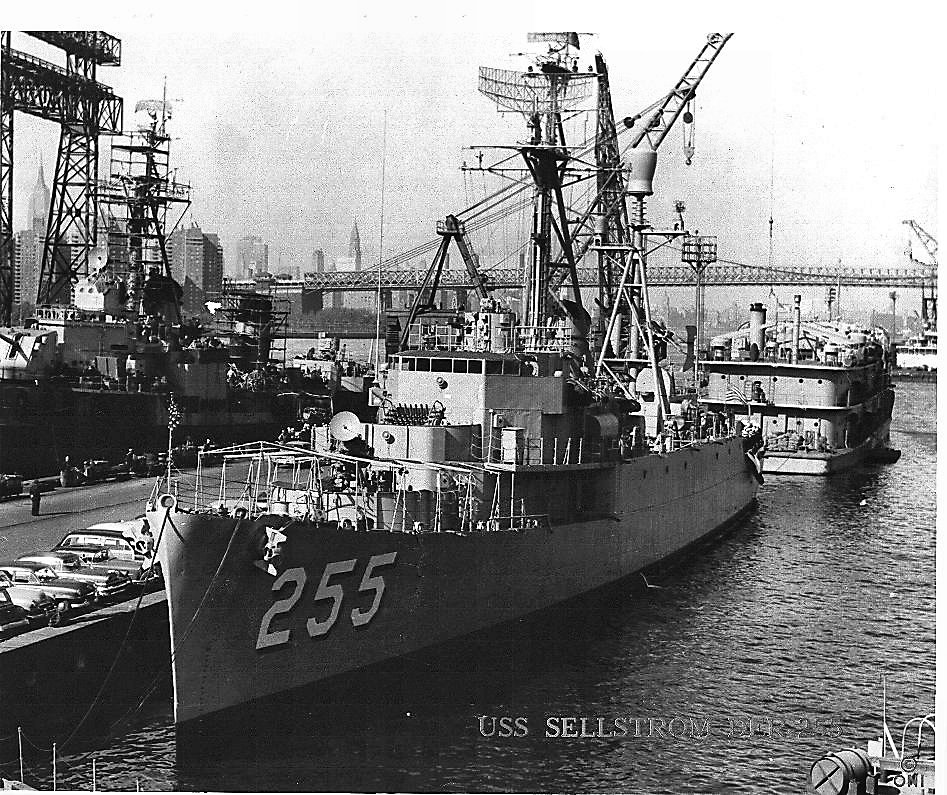


Since the beginning of the year, Destroyer Escorts were entering into service at an ever increasing rate.  On May 12, 1943 the USS Sellstrom (DE-255) was launched.

Wednesday, April 17, 2013

This Day, April 28, 1943

This Day, Seventy years ago

Seventy years ago on this day, Wednesday, April 28, 1943 during the Battle of the Atlantic no allied ships.  There were several German and Japanese ships sunk.

There was an epic battle in the North Atlantic involving U-Boats and British Escorts, convoy ONS-5:
"...In the course of a week, ONS 5 had been the subject of attacks by a force of over 40 U-boats. With the loss of 13 ships totalling 63,000 tons, the escorts had inflicted the loss of 6 U-boats, and serious damage on 7 more. This battle demonstrated that the convoy escorts had mastered the art of convoy protection; the weapon and expertise at their disposal meant that henceforth they would be able not only be able to protect their charges and repel attack, but they would also be able to inflict significant losses on the attacker. ONS 5 marked the turning point in the battle of the Atlantic. Following this action, the Allies inflicted a series of defeats and heavy losses on the U-boat Arm, a period known as Black May. This culminated in Dönitz withdrawing his forces from the North Atlantic arena.."
There were 148 U-Boats at Sea (Events this day - U-Boat Net). During the previous month March 1943, 107 merchant ships were lost to U-boats (627,000 gross tons). About two-thirds of the tonnage sunk by U-boats during March was in convoy (a record for the war).


Since the beginning ot the year, Destroyer Escorts were entering into service at an ever increasing rate.  On April 28, 1943 the USS Griswald (DE-7) was commissioned, Lieutenant Commander Charles M. Lyons in command.

Saturday, April 6, 2013

This Day, Seventy years ago, April 14

This Day, Seventy years ago

Seventy years ago on this day, Wednesday, April 14, 1943 during the Battle of the Atantic three allied ships (Norwegian Destroyer Eskdale, Norwegian/German Tug Pasvik, and British Naval Trawler Adonis) were sunk.  One U-Boat (U-526) was also sunk.
 
There were 122 U-Boats at Sea (Events this day - U-Boat Net). During the previous month March 1943, 107 merchant ships were lost to U-boats (627,000 gross tons). About two-thirds of the tonnage sunk by U-boats during March was in convoy (a record for the war).


Since the beginning ot the year, Destroyer Escorts were entering into service at an ever increasing rate.  On April 14, 1943 the USS Hurst (DE-250) was launched.  As of 2012, that ship is still in service in the Mexican Navy as the ARM Comodoro Manuel Azueta D-111.

Monday, October 22, 2012

This Day, Seventy years ago, 11/04/1942

This Day, Seventy years ago

Seventy years ago on this day, Wednesday, November 4, 1942 during the Battle of the Atlantic six merchant ships were sunk.  Three were sailing with Convoy SC-107: the British steam merchant Empire Lynx was torpedoed and sunk by the U-132; the Dutch steam merchant Hobbema was also torpedoed and sunk by the U-132; and the British steam merchant Daleby was torpedoed and sunk by the U-89. A straggler from Convoy SC-107, the British steam merchant Hatimura was torpedoed and sunk by the U-442. During the attack, it was believed that U-132 was destroyed by the explosion of the Hatimura which was carrying roughly a thousand tons of munitions.

Also, the unescorted British steam merchant Oued Grou was torpedoed and sunk by the U-126 off the coast of central Africa in the southeastern Atlantic Ocean;

The unescorted American steam merchant William Clark was torpedoed and sunk by the U-354 off Jan Mayen Island in the Arctic Ocean. The William Clark was one of thirteen vessels sent unescorted and alone on the Murmansk run due to the high losses in previous convoys. This operation was code named Operation FB. Only five vessels reached their destination.

In the Indian Ocean, U-178 sunk the unescorted Norwegian steam merchant Hai Hing; and the unescorted British steam merchant Trekieve.  This was U-178s first patrol. It lasted 125 days (six ships were sunk, 47,097 tons).

On Novermber 4, 1942 there were 122 U-Boats at Sea (Events this day - U-Boat Net). During the previous month, of October 1942, 105 ships (566,939 tons) were sunk and 15 ships (99,709 tons) were damaged by U-boats.

Saturday, October 20, 2012

This day, seventy years ago, 10/21/1943

Seventy years ago on this day, Wednesday, October 21, 1942 during the Battle of the Atlantic no merchant ships were sunk. Two Japanese merchant ships were sunk by American submarines in the Pacific. 

There were 116 U-Boats at Sea (Events this day - U-Boat Net).

Sunday, October 7, 2012

This day, seventy years ago, 10/07/1942

Seventy years ago on this day, Wednesday, October 7, 1942 during the Battle of the Atlantic four merchant ships were sunk: unescorted British steam passenger ship Andalucia Star was torpedoed and sunk by the U-107; The unescorted British motor merchant Boringia was torpedoed and sunk by the U-159; The unescorted American steam merchant Chickasaw City was torpedoed and sunk by the U-172; and The unescorted Panamanian motor merchant Firethorn was torpedoed and sunk by the U-172.


German Schnellboots (S-Boots - S.101, S.46, S.46, S.62, S.80, S.105, S.108 of the 2nd and S.63, S.79, S.117) of the 4th Motor Torpedo Boat Flotillas attacked convoy FN.32, escorted by destroyers Westminster and Vanity, 12 miles NE of Cromer in the North Sea. Rescue tug Caroline Moller was sunk by S.80. Also lost were freighters Jessie Maersk to S.117, Ilse to S.105, Sheafwater to S.46 and S.63, and Motor Launch 339 to S.62.

There were 114 U-Boats at Sea (Events this day - U-Boat Net).

Sunday, September 30, 2012

This day, seventy years ago - 09/30/1942

Seventy years ago on this day, Wednesday, September 30, 1942 during the Battle of the Atlantic four merchant ships were sunk: the unescorted British steam merchant Empire Avocet was torpedoed and sunk by U-125; the unescorted British steam passenger ship Kumsang was torpedoed and sunk by U-125; the unescorted British motor merchant Siam II was torpedoed and sunk by U-506; and the unescorted British steam merchant Alipore was torpedoed and then sunk by gunfire by U-516.

There were 108 U-Boats at Sea (Events this day - U-Boat Net).

During September, 1942: 101 ships (454,957 tons) were sunk and 15 ships (119,941 tons) were damaged by U-boats and mines. The German Army was engaging the Russian Army in Stalingrad.  The British were engaging the German Afrika Korps (General Rommel) in North Africa; and the American Marines were engaging the Japanese in Guadalcanal.  A Japanese submarine launched a seaplane which dropped bombs in Oregon.


On Tuesday, 15 September 1942, on the carrier Wasp, at 14:44 a lookout reported "three torpedoes ... three points forward of the starboard beam". A spread of six Type 95 torpedoes were fired by the Japanese submarine I-19. Wasp put over her rudder hard to starboard, but it was too late. Three torpedoes struck in quick succession, all hit in the vicinity of gasoline tanks and magazines. There was a rapid succession of explosions and Water mains in the forward part of the ship had been rendered inoperable. After consulting with Rear Admiral Leigh Noyes, Captain Sherman ordered "abandon ship" at 15:20. All badly injured men were lowered into rafts or rubber boats. The abandonment took nearly 40 minutes, and at 16:00—satisfied that no one was left on board—Captain Sherman abandoned the ship. The Wasp was sunk at 21:00 (9:00PM).  An oral history of the sinking was recorded by Rudolph Cusson in 2008. During the attack, 193 men had died and 366 were wounded.

The USS San Francisco (Frank Slater's ship) was 2500 yards on the Wasp's starboard quarter when the torpedoes struck. 


On September 27, 1942, en route from Cape Town to Surinam, the new liberty ship the SS Stephen Hopkins encountered the heavily armed German commerce raider Stier and her tender the Tannenfels.

This was a David and Goliath Battle. The main gun on the Stephen Hopkins was a 4" 50 Cal, which fired a 33 pound shell at a rate of 9 rounds per minute. The Steir had six - 5.9" (L45) guns, which fired a 100 pound shell at 7 rounds per minute. In one minute the Stephens could deliver approximately 300 pounds of shells on target. During the same period the Steir could deliver over 4,200 pounds on target (if all guns could bear on target).

Because of fog, the ships were only two miles apart when they sighted each other. At 8:55 am, the first round from the Hopkins disabled the Steir's rudder. The second round a water feed pipe in Stier’s engine room. The Steir was dead in the water, but it returned fire and soon the Hopkins was a flaming wreck. 

The Hopkins sank at 10 am. Forty-two of her crew were killed in the action, and three more died later; the fifteen survivors finally reached Brazil 31 days later.

Meanwhile Stier had been fatally damaged; unable to make headway, and not responding to the helm, Gerlach made the decision to abandon ship. Stier exploded and sank at 11:40.

Stephen Hopkin's commander, Captain Paul Buck, was posthumously awarded the Merchant Marine Distinguished Service Medal for his actions. So was US Merchant Marine Academy cadet Edwin Joseph O'Hara, who single-handedly fired the last shots from the ship's 4". The Destroyer Escort Kenneth M. Willett (DE-354) was named in honor of Kenneth Martin Willett who was posthumously awarded the Navy Cross during the action. Lt. Willett commanded the Stephen Hopkin's Armed Guard Unit.


Sunday, August 26, 2012

This Day, seventy years ago, 8/26/1942

Seventy years ago on this day, Wednesday, August 26, 1942 during the Battle of the Atlantic three merchant ships were sunk: the unescorted British steam merchant Beechwood was torpedoed and sunk by U-130; the unescorted Norwegian motor tanker Thelma was torpedoed and sunk by U-162; and sailing with Convoy LW-38, the British steam merchant Empire Kumari was torpedoed and sunk by U-375.

There were 101 U-Boats at Sea (Events this day - U-Boat Net).

During August, 1942: 114 ships (544,908 tons) were sunk and 17 ships (95,053 tons) were damaged by U-boats and mines.


The naval Battle of the Eastern Solomons took place on 24–25 August 1942. It was the second major engagement during the Guadalcanal Campaign. The two adversaries were never within sight of each other. All attacks were carried out by aircraft. Neither side secured a clear victory. However, Japan's losses were greater and included dozens of aircraft and their experienced aircrews. Also, Japanese reinforcements intended for Guadalcanal were delayed. 

Sunday, August 12, 2012

This day, seventy years ago, 08/12/1942

Battle of the Atlantic

Seventy years ago on this day, Wednesday, August 12, 1942 during the Battle of the Atlantic two merchant ships were sunk by U-508 while sailing with special convoy 12 (from Cuba): the Cuban steam merchant Manzanillo and the Cuban steam merchant Santiago de Cuba.

There were 96 U-Boats at Sea (Events this day - U-Boat Net).


USS Quincy (CA-39) Photographed from a Japanese cruiser during the Battle of Savo Island,
Quincy, seen here burning and illuminated by Japanese searchlights, was sunk in this action.
The Guadalcanal Campaign (Operation Watchtower) was the first major offensive by Allied forces against Japan. On August 7, 1942, marines landed on the islands of Guadalcanal, Tulagi, and Florida in the southern Solomon Islands. They overwhelmed the outnumbered Japanese defenders, who had occupied the islands since May 1942. The key prize was an airfield (Henderson Field) that was under construction on Guadalcanal. The Allies intended to use Guadalcanal as a base to support a campaign to eventually capture the major Japanese base at Rabaul.

Powerful U.S. naval forces supported the landings. They planned to unload as many supplies as possible throughout the night of August 8 and then depart early on August 9. That night, as the transports unloaded, the screening Allied cruisers and destroyers, were surprised and defeated by a Japanese Crusier/Destroyer Forece based at Rabaul. One Australian and three American cruisers were sunk and one American cruiser and two destroyers were damaged. The Japanese suffered moderate damage to one cruiser. The Japanese immediately retired to Rabaul without attempting to attack the transports. They were concerned about daylight U.S. carrier air attacks if he remained in the area. On August 10, one of the Japanese Cruisers (Kako) was torpedoed and sunk by the submarine USS S-44 near Rabaul (70 mi).

The USS San Francisco was assigned to escort the Carrier Wasp (about a hundred miles away from Savo Island). It was detached from the force that supported the landings, and was not directly involved with the battle.


On August 12th, 1942, a relief convoy to Malta is subjected to constant attacks during the day. Operation Pedestal was a British operation to get desperately needed supplies to the island of Malta. The most crucial supply was fuel delivered by the SS Ohio, an American-built tanker (with a British crew). The operation started on 9 August 1942, when the convoy sailed through the Strait of Gibraltar. The arrival of the last ships of the convoy on 15 August 1942, coincided with the Feast of the Assumption (Santa Marija) and the convoy was named the Santa Marija Convoy. 

Roughly fifty ships sailed through minefields, and came under attack by bombers, E-boats, and submarines.The operation cost of more than 400 lives, and only five of the original 14 merchant ships reaching the Grand Harbour. The SS Ohio made it to Malta but was so badly damaged that it sunk in Malta's Grand Harbor.

August 12, 1942 - Movie star Clark Gable enlists in the Army Air Corp. During the war he flew five combat missions.  Gable is discharged in 1944.

Sunday, July 29, 2012

This day, seventy years ago, 07/29/1942

Seventy years ago on this day, Wednesday, July 29, 1942 (during the Battle of the Atlantic two merchant ships were sunk): The Norwegian steam merchant Bill was torpedoed and sunk by U-155; and the unescorted Canadian steam merchant Prescodoc was torpedoed and sunk by the U-160.

There were 87 U-Boats at Sea (Events this day - U-Boat Net).

U-210 sights Convoy ON.115 in the North Atlantic (41 Ships). Within a week 3 ships will be sunk and two damaged.

In July, 1942:  97 ships (458,351 tons) were sunk and 11 ships (90,138 tons) were damaged by U-boats and mines.


The First Battle of El Alamein ended. The British had stopped the Afrika Korps advance into Egypt.

Soviet Marshal Josef Stalin began moving massive numbers of troops into the Stalingrad area.

Gas rationing began on the East Coast of the United States.

Operation Watchtower began as 17,000 U.S. Marines boarded ships near Fiji on July 26, 1942. The Watchtower force, numbering 75 warships and transports left for Guadalcanal on July 31. The USS San Francisco is in the Watchtower Force. 

Sunday, July 15, 2012

This Day, seventy years ago, 07/15/1942

Seventy years ago on this day, Wednesday, July 15, 1942 (during the Battle of the Atlantic three merchant ships were sunk): Dispersed from Convoy OS-33 the British steam tanker British Yeoman was torpedoed and sunk by U-201; Dispersed from Convoy OS-33, the British steam merchant Empire Attendant was torpedoed and sunk by the U-582; and Sailing with Convoy KS-520, the Nicaraguan motor merchant Bluefields was torpedoed and sunk by the U-576.

A few days before, on July 12,  Convoy OS-33 (41 ships, 8 escorts) was attacked by 6 U-boats in wolfpack Hai (Shark).  Eight ships were sunk, including the British Yeoman and Empire Attendant noted above.  There were no survivors on the Empire Attendant.

There were 70 U-Boats at Sea (Events this day - U-Boat Net).


Off of Cape Hatteras Convoy KS-520 was engaged by U-576. Besides the Bluefields (sunk, noted above) two other ships were damaged: the American ship Chilore (eventually it sunk on July 24) and the Panamian ship J.A. Mowinckel.  The unlikely hero was the US Navy Auxiliary Ship Unicoi, IX-216 (pictured above).  The gunners on the Unicoi managed to damage U-576 (the U-boat was sunk later in the day by aircraft). 


Also - Field Marshal Erwin Rommel's Afrika Korps and the British 8th Army are engaged in a major battle at El Alamein, Egypt.


The Destroyer Escorts USS Stewart (DE-238) and USS Sturtevant (DE-239) were laid down at the Brown Shipbuilding Houston.

Sunday, July 1, 2012

This day, seventy years ago, 07/01/1942


The next day I will be available for tours is Sunday, 07/1/2012. If it's a Sunny day I start with a walk around Albany (approx. 5K, 3+ miles) at 9:00 AM. Visitors are welcome to tag along but please send me an email.  


Seventy years ago on this day, Wednesday, July 1, 1942 (during the Battle of the Atlantic three merchant ships were sunk): the unescorted American steam merchant Warrior was torpedoed and sunk by the U-126; The unescorted Norwegian steam merchant Cadmus was torpedoed and sunk by the U-129; and the American steam passenger ship City of Birmingham was torpedoed and sunk by the U-202.  


In the Mediterranean, while sailing in a convoy, the British steam merchant Marilyse Moller  was torpedoed and sunk by the U-97.

On July 1, 1942 there were 75 U-Boats at Sea (Events this day - U-Boat Net).  During June 1942, 134 ships (632,869 tons) were sunk and 11 ships (67,343 tons) were damaged by U-boats and mines.

In the Artic Ocean, the infamous Murmask Convoy, PQ-17 (PQ-17 wikipedia) (PQ-17, U-Boat.Net) was discovered by German Aircraft and U-boats on the 1st of July.  Within a few days, 24 of the 35 ships in this convoy would be sunk. Prime Minister Winston Churchill called the event, "one of the most melancholy naval episodes in the whole of the war." The Soviet Union did not believe so many ships could be lost in one convoy and openly accused the Western Allies of lying.


Sad story in the Pacific, the American submarine USS Sturgeon (SS 187), torpedoed and sank the 7,266 ton Japanese transport ship Montevideo Maru about 65 nautical miles west of Cape Bojeador, Luzon, Philippines. From wikipedia - "... The was transporting Australian POWs and Allied civilians to Hainan Island. 1140 (including 88 Japanese crew) were killed while 18 survived. Some of the Japanese including the ship's captain made it to the Philippines but most, including the captain, were killed by local guerrillas. This loss of Australian lives is the worst maritime disaster in Australian history. Only one eyewitness account has ever emerged. After 60 years the sole surviving Japanese sailor described the "death cries" of trapped Australians going down with the ship while others sung Auld Lang Syne.  "


Also on July 1, 1942 - Field Marshal Erwin Rommel's Afrika Korps and the British 8th Army are engaged in a major battle at El Alamein, Egypt.

Sunday, June 24, 2012

This day, seventy years ago, 06/24/1942

The next day I will be available for tours is Sunday, 06/24/2012. If it's a Sunny day I start with a walk around Albany (approx. 5K, 3+ miles) at 9:00 AM. Visitors are welcome to tag along but please send me an email.  btw - I have to leave early this Sunday (2:30 PM).


Seventy years ago on this day, Wednesday, June 24rd, 1942 (during the Battle of the Atlantic three merchant ships were sunk): the American steam tug John R. Williams struck a mine and sank off Cape May, New Jersey; the unescorted British steam merchant Willimantic was sunk by gunfire by the U-156; and the unescorted Yugoslavian steam merchant Ljubica Matkovic was torpedoed and sunk by the U-404.

On June 24th, 1942 there were 73 U-Boats at Sea (Events this day - U-Boat Net).


On June 24th, 1942,  in Nazi occupied Czechoslovakia the village of Ležáky was completely razed to the ground for reprisal for the assassination of Reinhard Heydrich (Butcher of Prague).

Sunday, June 17, 2012

This day, seventy years ago, 06/17/1942

The next day I will be available for tours is Sunday, 06/17/2012. If it's a Sunny day I start with a walk around Albany (approx. 5K, 3+ miles) at 9:00 AM. Visitors are welcome to tag along but please send me an email.


Seventy years ago on this day, Wednesday, June 17rd, 1942 (during the Battle of the Atlantic four merchant ships were sunk): the unescorted American steam merchant Millinocket was torpedoed and sunk by the U-129; the unescorted Norwegian steam tanker Moira was was torpedoed and then sunk by gunfire by the U-158; the unescorted Panamanian steam merchant San Blas was torpedoed and sunk by the U-158; and sailing with Convoy KS-511, the American steam merchant Santore struck a mine and sank in the Chesapeake Bay.

HMS Wild Swan ( Royal Navy): World War II: The W-class destroyer was bombed and sunk in the Bay of Biscay by Junkers Ju 88 aircraft of the Luftwaffe.


On June 17rd, 1942 there were 78 U-Boats at Sea (Events this day - U-Boat Net). 

Sunday, June 3, 2012

This day, seventy years ago, 06/03/1942

The next day I will be available for tours is Sunday, 06/3/2012. If it's a Sunny day I start with a walk around Albany (approx. 5K, 3+ miles) at 9:00 AM. Visitors are welcome to tag along but please send me an email.


Seventy years ago on this day, Wednesday, June 3rd, 1942 (during the Battle of the Atlantic four ships were sunk): an unescorted Norwegian motor tanker Høegh Giant was torpedoed and sunk by the U-126; an unescorted Swedish steam merchant Anna was sunk by gunfire after two torpedoes missed by the U-404; an unescorted and unarmed American steam merchant City of Alma was torpedoed and sunk by the U-172; and an unescorted American steam tanker M.F. Elliott was torpedoed and sunk by the U-502. Four smaller vessels were also sunk by gun fire. 

On June 3rd, 1942 there were 60 U-Boats at Sea.  U-109 returned from a 71 day patrol, 2 ships sunk (11,544 tons) and 1 ship damaged (6,548 tons).


In the Pacific Ocean, the Battle of Midway and the Battle of Dutch Harbor (Alaska) started on June 3rd.

Sunday, May 27, 2012

This day, seenty years ago, 05/27/1942

The next day I will be available for tours is Sunday, 05/27/2012.  If it's a Sunny day I start with a walk around Albany (approx. 5K, 3+ miles) at 9:00 AM.  Visitors are welcome to tag along but please send me an email.


Seventy years ago (Wednesday, May 27th, 1942), during the Battle of the Atlantic four ships were sunk: the British motor tanker Athelknight (U-172); the American army transport Jack (U-558);the Dutch motor merchant Polyphemus(U-578) and the Norwegian motor tanker Hamlet (U-753).


In the Artic Ocean, PQ16 was making it's way the Murmask. Three ships were sunk by aircraft on May 27th.


Also on May 27th, Dorie Miller received the Navy Cross, from Admiral Chester W. Nimitz—the Commander in Chief, Pacific Fleet— on board aircraft carrier Enterprise for his extraordinary courage during the Battle of Pearl Harbor. A year and a half later Dorie Miller was killed in action on the Carrier Liscome Bay. In 1973 a Knox class Destroyer Escort was named for Dorie Miller (USS Miller, FF-1091).

Wednesday, May 9, 2012

05/06/2012 - This day, in Wold War II


In the briefing room the Slater started a chalk board noting "this day in WWII".  Great idea, but I was a little disappointed with the entry - a reference to the prelude to the Battle of Coral Sea (the main battle occurred the day following, on May 7th).

I knew there were a few other events that happened on this day, seventy years ago but I had to do a little research first.  In my opinion the big event of May 6th (70 years ago) was the The surrender of Corregidor.   A video of the surrender is available.


Things were a little busy in the North Atlantic as well. German U-Boats were operating off the American Coast (Operation Drumbeat, Paukenschlag).   

On Wednesday, May 6th, 1942 six merchant ships were sunk.  The total tonnage lost was 27,913 (roughly equivalent to 700 tractor trailer trucks).  Twenty seven sailors were killed, but 182 survived.  One ship, the Alcoa Puritan was carrying six passengers who were torpedo several days before.  It was sunk in deep water, approximately 120 miles from Mobile, Alabama.  A few years ago a survey of the wreck site was done by the Past Foundation and a comprehensive video is available.