Recently people have been joining me on my Sunday Walks in Downtown Albany. Typically, I walk in Albany when I'm scheduled as a tour guide on the USS Slater. A slide show and a map are detailed at this blog entry. I plan on walking on Memorial Day, Monday, May 27. You can contact me at: dedocent@gmail.com.

More on the USS SLATER (www.ussslater.org).

Monday, July 2, 2012

7/1/2012 - Three WWII Vets

Today was a little hot, but quite a few people turned out. As usual, I started the day with a three mile walk through Albany.  Later, I gave two tours that included three WWII Vets. The 1st Group included two vets who were neighbors. One fellow was a real cut-up. He served on the USS Randolph, USS Charger and the USS Loeser. The other vet served on Landing Craft Tank (LCT-587 or LCT-876). Since LCT-876 was destroyed in transit to Okinawa I'm guessing it was LCT-587. Because of mobility issues we did an abbreviated tour.

Later in the day I had a big group that included a Coast Guard WWII Vet who served as a coxswain on a Patrol Frigate in the North Atlantic. This group ranged in age from 6 to 85. It's always a challenge to give an interesting tour to such a diverse group.


In the middle of the Pacific there is an Island Atoll - Ulithi.  This was the forward operating base, thought to be beyond the range of Kamikaze Attacks.


On March 11, 1945 a long range bomber managed a surprise attack on the USS Randolph:  Here is an account - "...It was March 11, 1945. The next night there was a movie on the hangar deck called "A Song To Remember." We may have forgotten the song, but we will always remember the night. I was watching the show the night we were hit and as of next month I will be 76 years young. I have tried to find some of my buddies from the Fireroom gang but only have found only 4 who are up and around and are on the net. I Thank my God that I am still able to cope with life today !  ............."


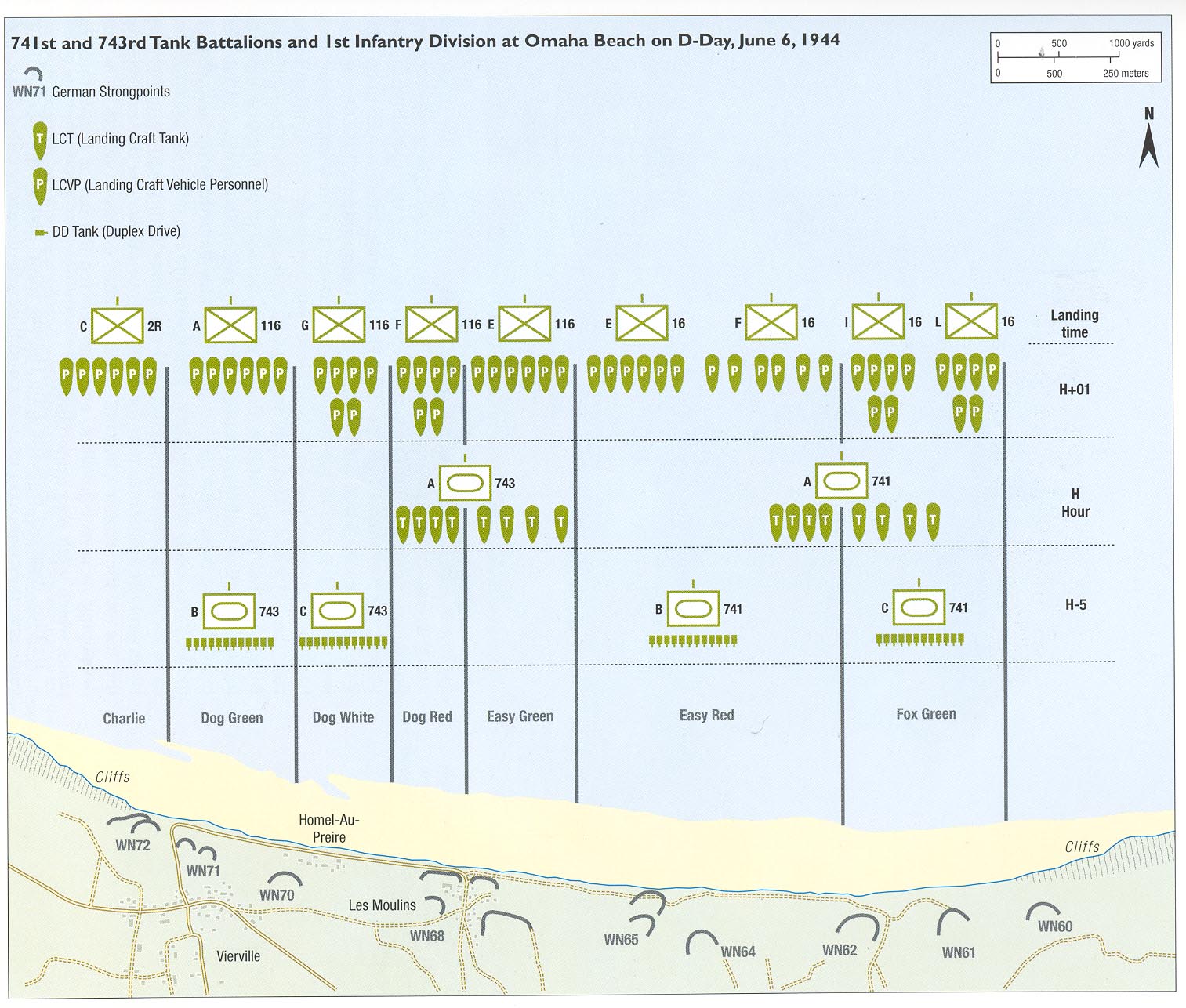
LCT-587 was a Landing Craft Tank (Mark 6).  This LCT-587 was at Omaha Beach, Dog Green sector at H-10 Hour (6:20 a.m.).  From US Army History of Omaha Beach: "...The Initial Assault Wave: Ninety-six tanks, the Special Engineer Task Force, and eight companies of assault infantry (1,450 men), landing just before and after 0630, were to carry out the first assault missions (Map No. V). On the right, the 743d Tank Battalion brought in all its tanks on LCT's. Company B, coming in directly in face of the Vierville draw, suffered from enemy artillery fire. The LCT carrying the company commander was sunk just of shore, and four other officers were killed or wounded, leaving one lieutenant in Company B. Eight of that company's 16 tanks landed and started to fire from the water's edge on enemy positions. .... "


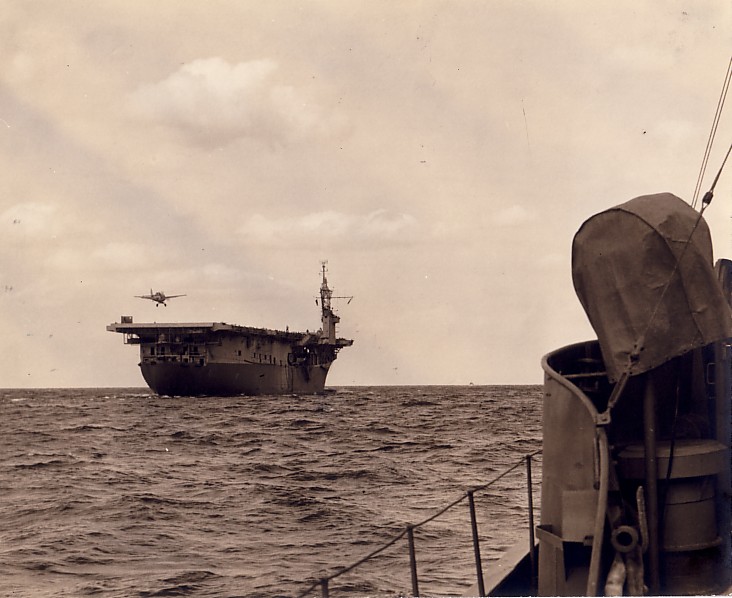
The USS Charger was one of the first escort carriers.  Early in the War the US Navy confiscated four C-3 Merchant ships, converted them to Escort Carriers, and transferred them to the British Navy under Lend Lease.  After Pearl Harbor the HMS Charger was transferred back to the US Navy and used a training platform for air crews.  While the ship was largely assigned to Chesapeake Bay, it was subject to frequent mishaps. 

USCGC Haida [WPG 45] upon relief at Weather Station Able 1500 miles West of Strait of Juan de Fuca
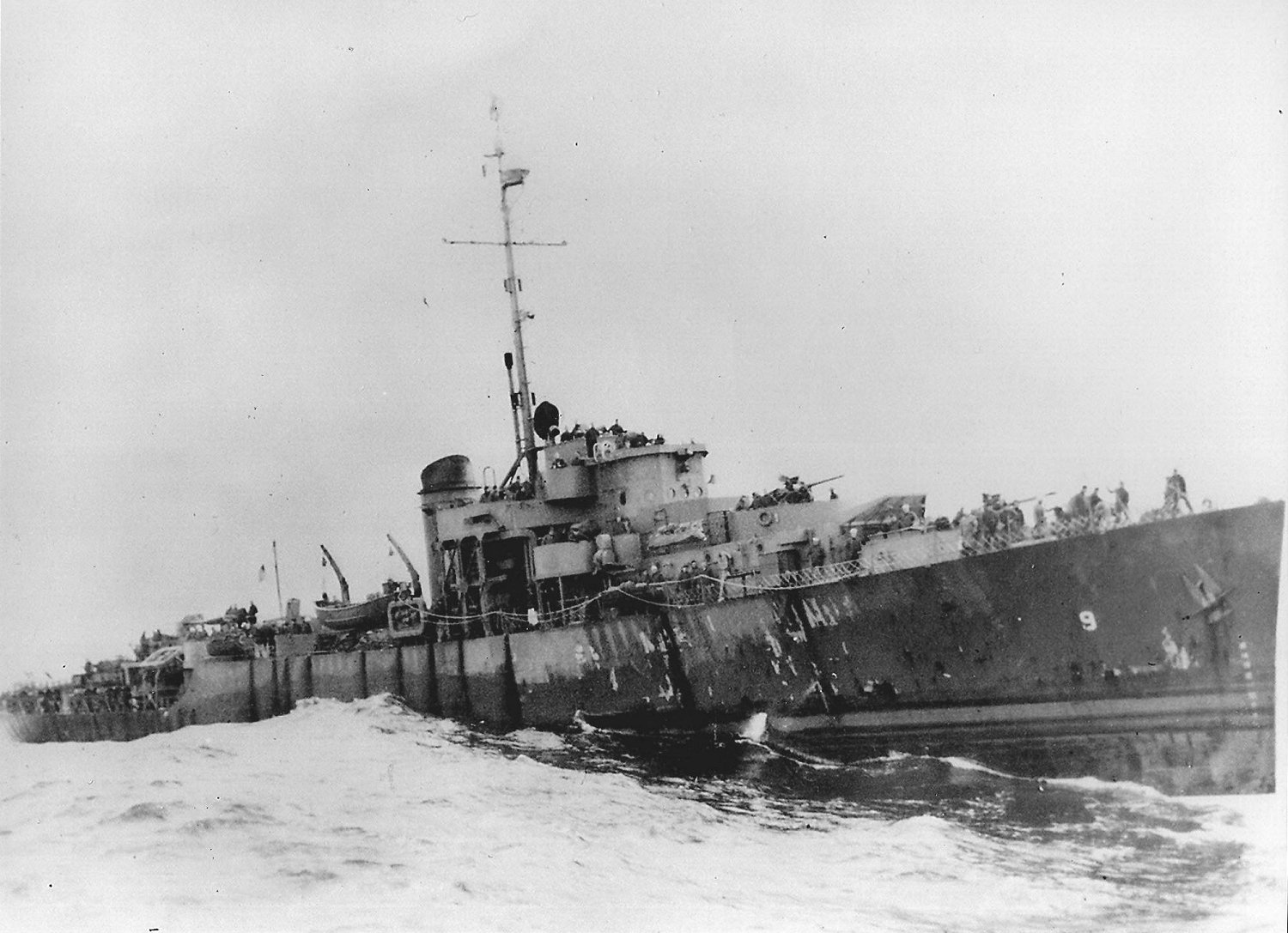
The insatiable demand for anti-submarine vessels in 1942 led the Navy to utilize merchant shipyards for their construction. These yards were not thought capable of building ships such as DEs to naval standards, so the British River-class frigate design (similar to the DEs) was modified for American construction techniques. While similar to DEs, they used a Triple Expansion Power Plant and a simpler engineering layout (limited evaporators). They were built with fewer watertight compartments, firefighting and damage control features. And they weren't equipped with torpedo tubes. The frigate program was plagued by delays; only 12 had been completed before the end of 1943, by which time more than 200 DEs were in commission and the Allies were winning the Battle of the Atlantic. Subsequent Patrol Frigate and DE Ships were cancelled.

Sunday, July 1, 2012

This day, seventy years ago, 07/01/1942


The next day I will be available for tours is Sunday, 07/1/2012. If it's a Sunny day I start with a walk around Albany (approx. 5K, 3+ miles) at 9:00 AM. Visitors are welcome to tag along but please send me an email.  


Seventy years ago on this day, Wednesday, July 1, 1942 (during the Battle of the Atlantic three merchant ships were sunk): the unescorted American steam merchant Warrior was torpedoed and sunk by the U-126; The unescorted Norwegian steam merchant Cadmus was torpedoed and sunk by the U-129; and the American steam passenger ship City of Birmingham was torpedoed and sunk by the U-202.  


In the Mediterranean, while sailing in a convoy, the British steam merchant Marilyse Moller  was torpedoed and sunk by the U-97.

On July 1, 1942 there were 75 U-Boats at Sea (Events this day - U-Boat Net).  During June 1942, 134 ships (632,869 tons) were sunk and 11 ships (67,343 tons) were damaged by U-boats and mines.

In the Artic Ocean, the infamous Murmask Convoy, PQ-17 (PQ-17 wikipedia) (PQ-17, U-Boat.Net) was discovered by German Aircraft and U-boats on the 1st of July.  Within a few days, 24 of the 35 ships in this convoy would be sunk. Prime Minister Winston Churchill called the event, "one of the most melancholy naval episodes in the whole of the war." The Soviet Union did not believe so many ships could be lost in one convoy and openly accused the Western Allies of lying.


Sad story in the Pacific, the American submarine USS Sturgeon (SS 187), torpedoed and sank the 7,266 ton Japanese transport ship Montevideo Maru about 65 nautical miles west of Cape Bojeador, Luzon, Philippines. From wikipedia - "... The was transporting Australian POWs and Allied civilians to Hainan Island. 1140 (including 88 Japanese crew) were killed while 18 survived. Some of the Japanese including the ship's captain made it to the Philippines but most, including the captain, were killed by local guerrillas. This loss of Australian lives is the worst maritime disaster in Australian history. Only one eyewitness account has ever emerged. After 60 years the sole surviving Japanese sailor described the "death cries" of trapped Australians going down with the ship while others sung Auld Lang Syne.  "


Also on July 1, 1942 - Field Marshal Erwin Rommel's Afrika Korps and the British 8th Army are engaged in a major battle at El Alamein, Egypt.

Wednesday, June 27, 2012

06/24/2012 - USS Amsterdam

USS Astroia (left) and USS Amsterdam (Right) - San Diego Reserve Fleet 1970
When I begin a tour I typically ask visitors if they were in the Navy; had family members in the Navy; or any association with the Navy.  On this visit I had a relative of Mrs. William E. Hasenfuss who sponsored the USS Amsterdam CL-101.  A ship sponsor is the person who breaks a champagne bottle on the bow of  a ship when it is launched.  Mrs. Hasenfuss was a gold star mother from Amsterdam, NY.  Her son was in the Army Air Force, and he was killed at Hickam Field, Pearl Harbor on December 7, 1941.


Many years ago (in 1970) I happen to do a little legal requisition work on the USS Amsterdam a few weeks before the ship was scrapped. When a ship is scheduled for disposal, active sailors and museum ships are given an opportunity to obtain spare parts. Some of the repair parts for the USS Slater are obtained in a similar fashion. 


I remember that the USS Amsterdam was a gold mine.  My interest was the  5" / 38 Cal Gun Mounts.  Even though the mounts were over twenty five years old, they were in excellent condition.  We stripped quite a collection of spare parts.


About six months later my ship (USS Henry W. Tucker) was deployed to Vietnam.  I was experiencing problems with my fuse setter and I was able to trade (navy slang - cumshaw) a breech block and recoil rod from the USS Amsterdam with the  Naval Ordnance Systems Support Office in Subic for priority repairs. As far as I know these spares from the USS Amsterdam helped three Navy Destroyers deployed to Vietnam.